About us
Capable, kind, and connected to the world.
At Missoula Community School, we inspire children to explore their worlds, to create as they develop joy in learning, and to care about themselves and others. Founded in 2001 by educators and parents focused on progressive early childhood education, we've spent 25 years proving that global citizenship begins at birth.
How children learn here
Four pillars of our approach
Project-Based Learning
Extended projects grow from children's own questions, tackled over weeks, documented, and revisited as a group.
Inquiry-Based Learning
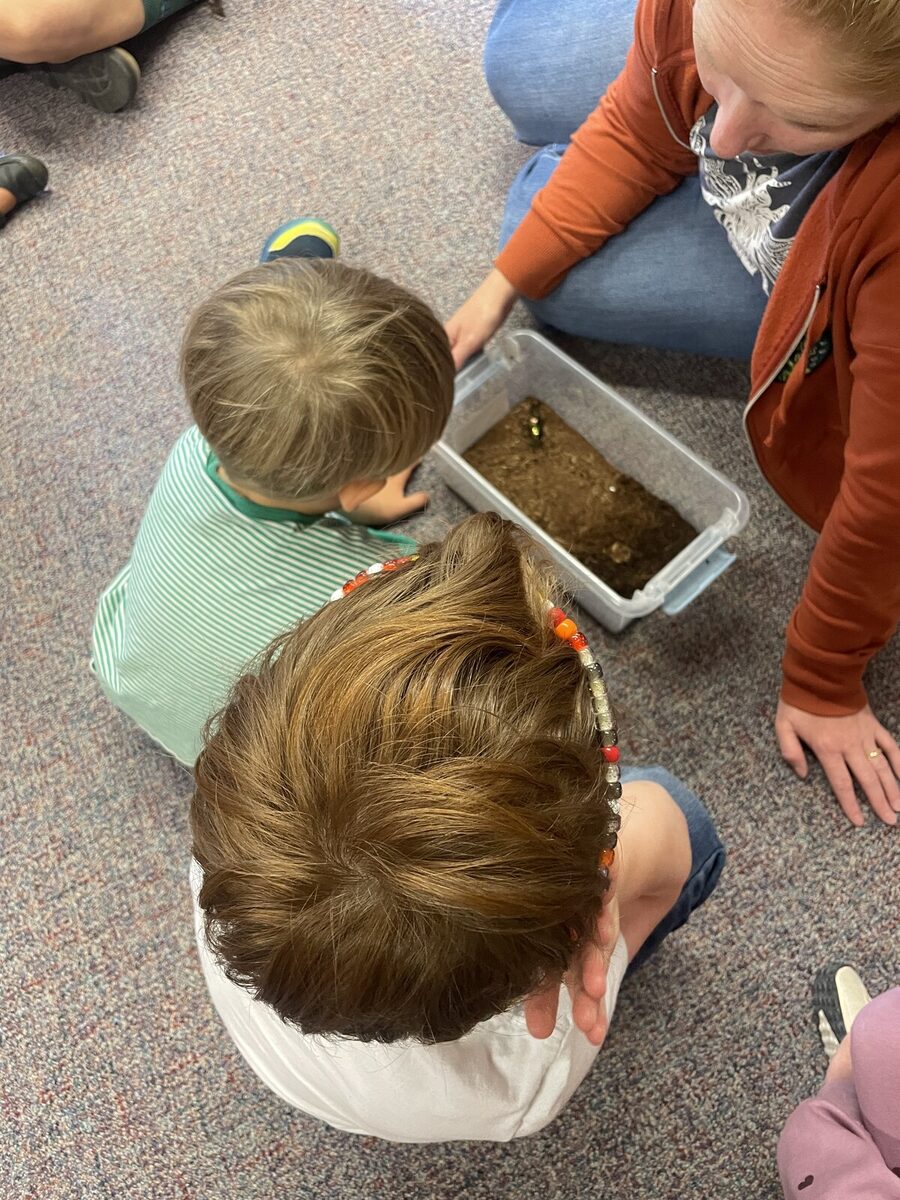
Curriculum develops throughout the year based on children's interests and wonderings: experiments, provocations, community discussions.
Reggio Emilia Approach
The classroom as 'third teacher': children and teachers are co-constructors of learning, following inquiry into real-world problems.
Mindfulness-Based ECE
The mindfulness bell, calm corners, mindful eating, closing circle and 'thankfuls' have been foundational practice since our first day.
Taking inspiration from the Reggio Emilia approach, we center experiential, project-based learning that is child-led and teacher-scaffolded. In our little mountain valley, cultural connection takes the form of experiences in nature, partnerships with local organizations, and connection to Indigenous history, wisdom and culture.
We believe children of all ages are capable of navigating complex subject matter through inquiry and play, and it is our role to provoke and scaffold that inquiry in developmentally appropriate ways. The school is a reflection of the culture, and in turn, the culture is impacted by the school.
Our land acknowledgement
We are playing and learning on the home of the Salish and Kootenai people.
They were the first ones to love this land, and they’re still here today. We promise to be good friends to the earth, to listen to their stories, and to take care of all living things. Thank you for sharing this beautiful place with us.
Our guiding principles
We recognize all children's intelligence, creativity, sensibility, dignity and humanity.
We safeguard children's physical, psychological and social-emotional wellbeing, building secure relationships for healthy development.
We cultivate a responsive school community in which all children, families and staff fully include and support each other.
As capable citizens, we use our words, actions and energy to be a force for social justice and environmental sustainability.
We respect early childhood education as a professional field of expertise with high standards of excellence.
Pedagogy in practice
How we plan
We plan backwards. The finish line comes first, and the lessons are built to lead learners there.
The outcome, first
Teachers facilitate conversations with learners to determine a project's outcome, often a positive impact on wildlife, the environment, and/or our neighbors.
The path there
From that outcome, teachers use backward design, in the tradition of Harvard's Understanding by Design, to build the lessons and experiences that lead learners there.
Social-emotional cornerstone
Superheroes of Kindness
A longstanding MCS tradition honoring the capacity for kindness within each of us. Through kindness missions, acts of community caring, children practice empathy and perspective-taking, letting kindness flow without regard for reward. The kindness capes were originally sewn by MCS families. No act of kindness is too small, and no child is too young to make a difference.
Our band of tiny superheroes understand that they are not too small to make a difference in their community and their world.
Embodied land acknowledgement
Missoula Community School is located on the ancestral homelands of the Séliš, Qlíspé, and Ktunaxa-Ksanka people. In our work with children, we aim to foster meaningful relationships with the land and with all living beings, and to inspire future generations of allies and activists. Our classroom experiences are scaffolded by Indigenous ecological wisdom, story, history, and culture: land acknowledgement as an evolutionary, living process.